A Ukrainian Mother’s Search for Real Winter
Daria Partas • April 19, 2026
Arctic Coast - Finland
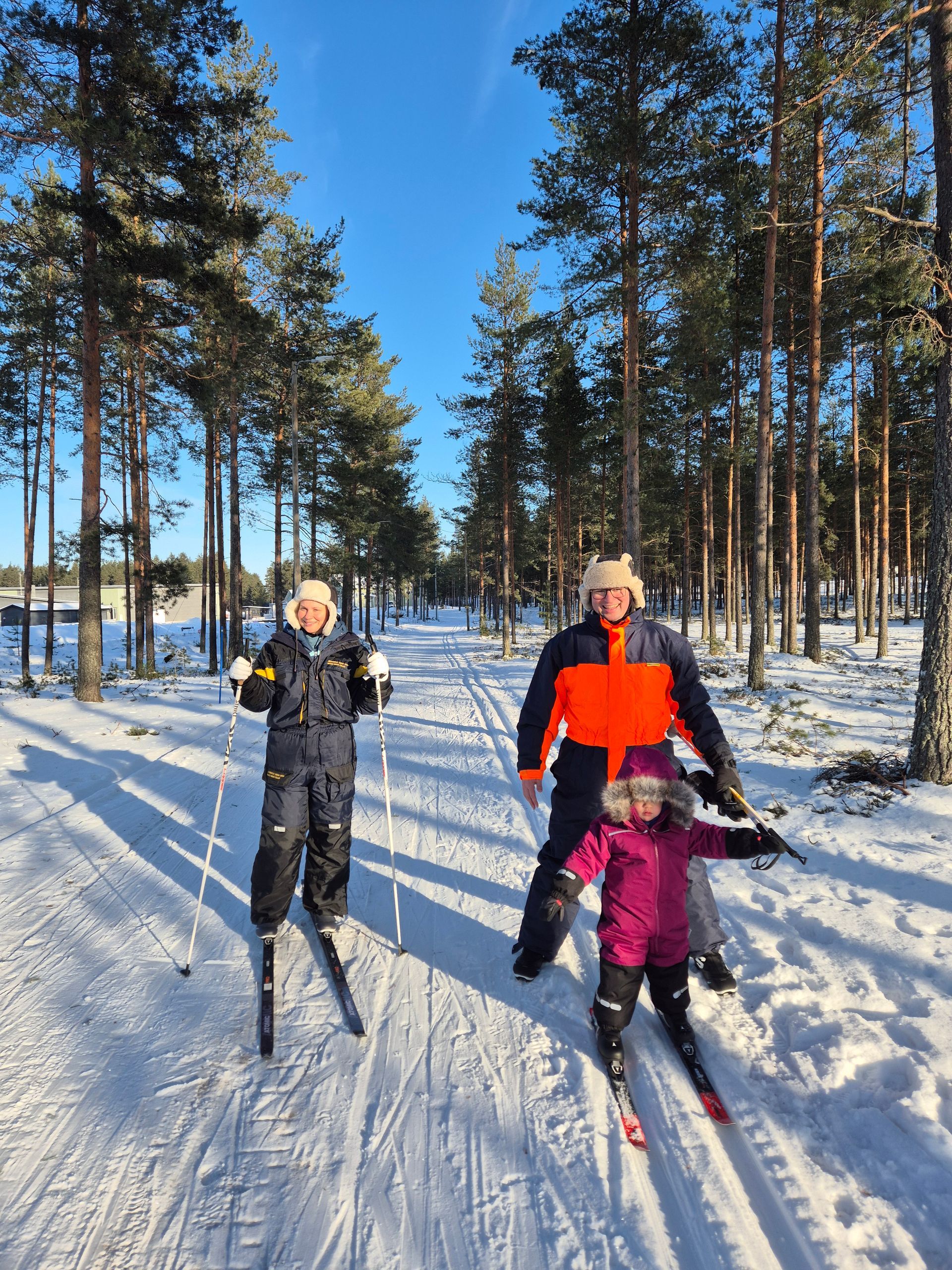
(Text and images, copyright Daria Partas, reproduced with kind permission)
A first-person travel piece, written by Daria Partas, a British-based entrepreneur and writer (Vogue Business and others) who is hoping to tell a story that is far more personal than her previous work.
Our youngest daughter Alexa, 3, had never seen snow before this half
term trip to Finland. She was born in London in January where
winter is more a shift in light than a transformation of landscape.
I had spent two weeks preparing for cold, hunting down woollen base
layers in a city that considers –2°C an event, ordering
balaclavas, thermal tights, fleece mid-layers, merino wool socks.
Boots were the hardest. London does fashion; it does not do Arctic.
In the end, we were told heavy overalls and proper winter boots
would be waiting for us in Kalajoki, sizes requested in advance with
Nordic efficiency.
Alexa's first view of snow was through the aeroplane window in
Helsinki, white lining the runway, banked against hangars. She
pressed her forehead to the glass but did not yet understand it.
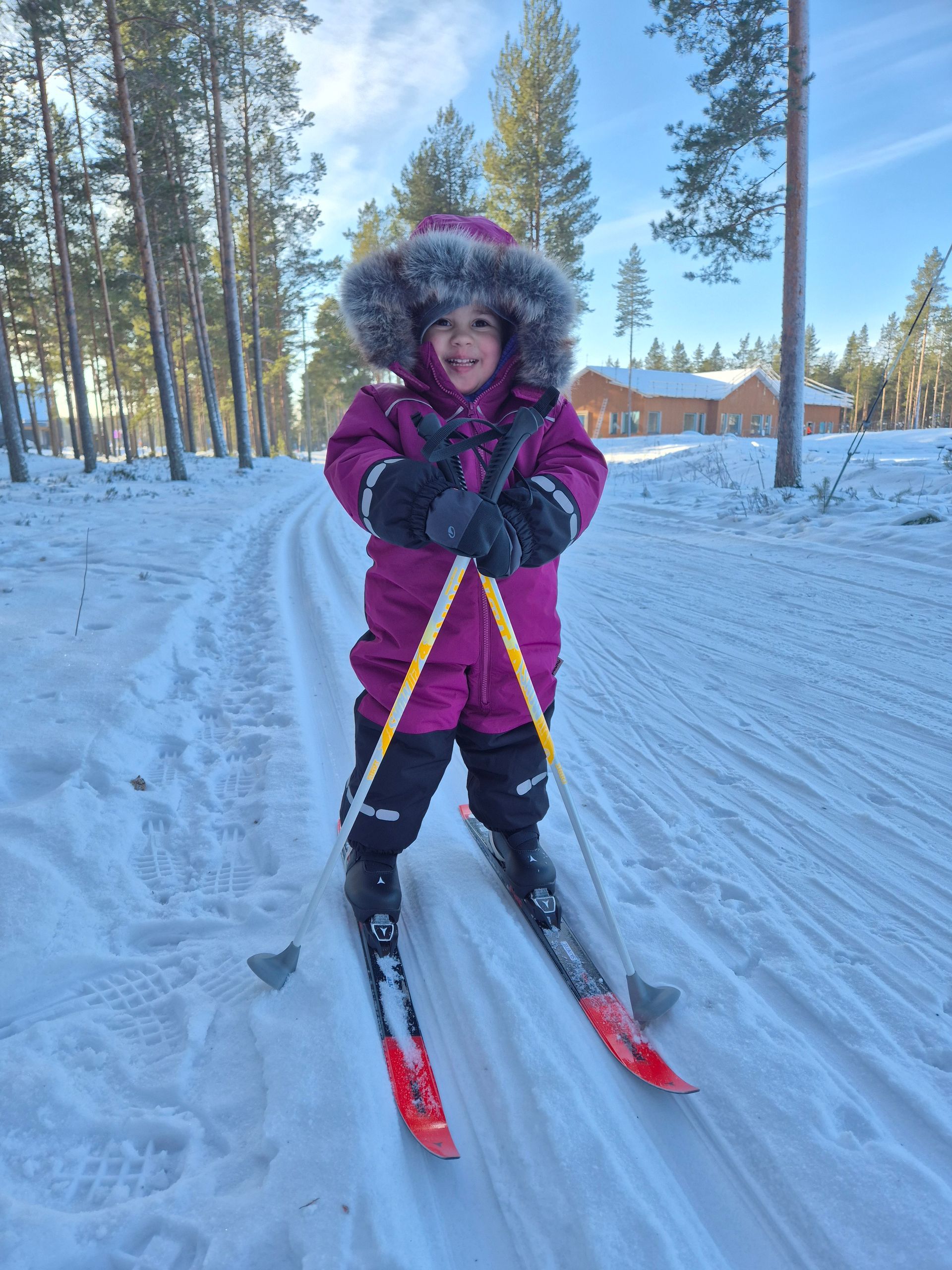
The following day, dressed in more layers than her small frame could
convincingly support, she stepped onto the frozen Baltic. The
overalls issued by our hosts swallowed her whole. Beneath them were
wool tights, base layers, fleece. She moved cautiously, like a
small, determined astronaut, as though walking across an unfamiliar
planet. She said very little absorbing the cold.
That night, when we were driven out across the frozen sea in a sled
pulled by snowmobile, the sky opened into a clear vault of stars,
sharp and innumerable, unblurred by light pollution. In London the
night sky is an amber haze; here it was black and pierced with cold
light. Above and around us, the darkness was complete, and the sky
crowded with stars. Alexa stared upwards through the shield of her
helmet for a long time before falling asleep, her head tilted
awkwardly inside the helmet.
We woke her near the fire where we had stopped. The cold had
deepened. She began to complain in confusion. Her fingers and toes
hurt. She was experiencing a new sensation of cold biting.
For a moment she trembled, startled by the intensity of sensation,
and I felt a flicker of doubt. Were we pushing too far? Had this
landscape exceeded what a three-year-old should be asked to
negotiate?
I grew up with winter, in the flat, exposed steppe of southern
Ukraine, and in the long winters of my Russian grandmother's
childhood stories. I wore felt boots, thick bearskin coats, Orenburg
shawls. There was a banya in the garden, built by my grandfather,
and afterwards tea from a samovar, honey, and bagels. But knowing
winter as a child is not the same as watching your own off-spring
meet it for the first time.
In truth, the temperature was manageable. The air in Finland felt
clearer, easier to breathe than the damp, needling cold I remembered
from childhood. Even when temperatures slid towards –20°C, it
carried less hostility than I was bracing myself for.
Over the following days Alexa adjusted.On the toboggan run by the
shore, she clung to her father as they hurtled downhill, snow
spraying into her face. She shrieked from the shock of speed and
then, of course,demanded to go again. On the ice she began to trust
her boots.
We had arrived prepared for spectacle - aurora borealis, reindeer,
the Instagram-informed theatre of winter. We did not see the
northern lights at all and by the end of the week, it no longer felt
like a loss. Instead, what we found was an ordinary life.
Winter is lived, inhabited, embraced in Finland.
Families gathered at the local spa in the evenings, children padding
between warm pools and saunas. Teenagers skated in open rinks with a
competence that borders on instinct. Men drilled neat holes through
25 centimetres of sea ice for fishing The temperature dropped
towards -20°C again by the end of the week, and no one appeared
bothered.
In London, cold is hugely disruptive. It halts transport and becomes
news. Here it seemed ... nothing to take note of. This may seem an
obvious assessment. Of course, the Finnish would be unaffected, this
is their everyday climate after all. But when you're there, around
a cold-weather-culture first hand, it's quite remarkable. These
people live with totalt competence. There is no sense of anyone
romancing about the weather, it is lived, not survived.
If I think back to our week in Kalajoki, it resolves into an image
of our daughter standing on the Baltic ice, absorbing a season that
would never belong to her in the same way it did to them, but that,
for a few days, she had entered fully.